Amsterdam’s first Hare Krishna address was barely in Amsterdam at all. In mid-1970 a small pioneer team rented a two-bedroom apartment at Frissenstein 22, ten floors up a new tower block in the Bijlmermeer, on land only recently reclaimed from the water.
The trouble was distance. The devotees’ work lay in the center of the city, where they chanted in the streets and served food, so each day began with a trek: heavy iron pots of prasadam hauled onto public transport, about forty-five minutes each way. It was not glamorous. It was a handful of young people solving ordinary problems so that something out of the ordinary could keep happening in public.
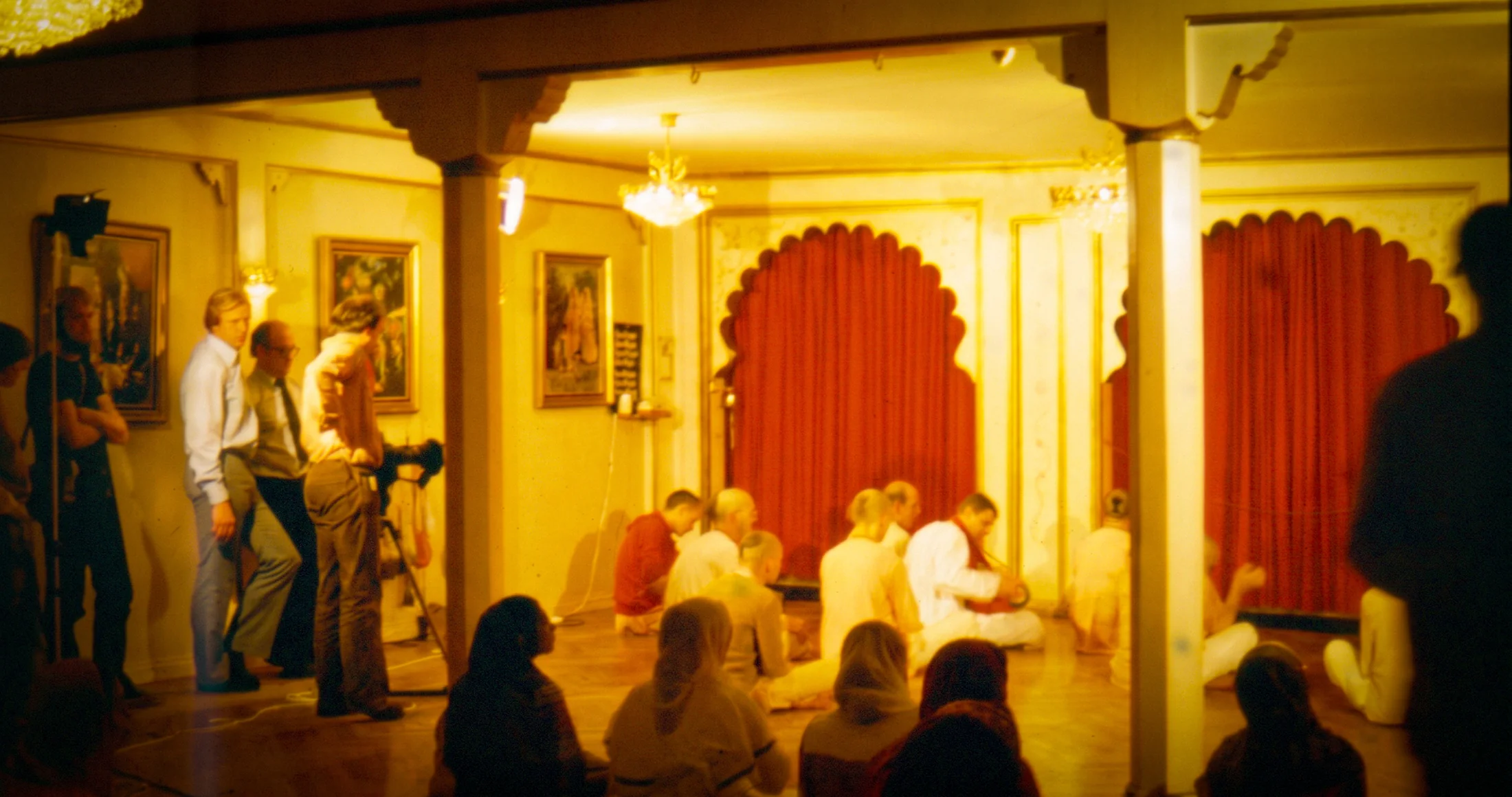
In May 1971 they came in from the edge. Bethaniënstraat 39 was a former bicycle-storage garage near the Red Light District—central, cramped and anything but comfortable. It became temple and home at once, and some twenty-five residents slept on old wooden doors laid across a mezzanine. On paper, too, the community found its footing when Stichting ISKCON Amsterdam was formally registered under Dutch law.
Meanwhile, behind a heavy curtain, something was being made. In early 1972 James Green, an American craftsman known as Jagannatha dasa, obtained hardwood logs at the Amsterdam docks and began to carve Lord Jagannatha, Lord Balarama and Subhadra Devi, hidden from public view while the community prepared for Srila Prabhupada’s expected visit.
Look inside
Browse Chapters Previews
Short previews with videos of the chapters of The Amsterdam Adventure book.